Who it is for
Anyone with a persistent leak at a chimney or abutment, owners of period and bay-fronted properties, homeowners re-roofing who want the details done properly, and commercial owners with parapet and box gutter runs.

Services · Leadwork & Lead Welding
The detail that decides whether a roof leaks in five years. Lead cut, dressed and welded by hand to the right code, with the joints, laps and fixings that let it move without splitting.
Hand-dressed, not mastic-patched · Roofers who work lead every week · £1,000,000 public liability cover
We run 24/7 emergency cover. A £150 call-out gets a roofer to the property to make it safe and stop the water, with the repair priced before any further work.
Call 07808 839833Emergency line answered day and night
Recent Leadwork & Lead Welding
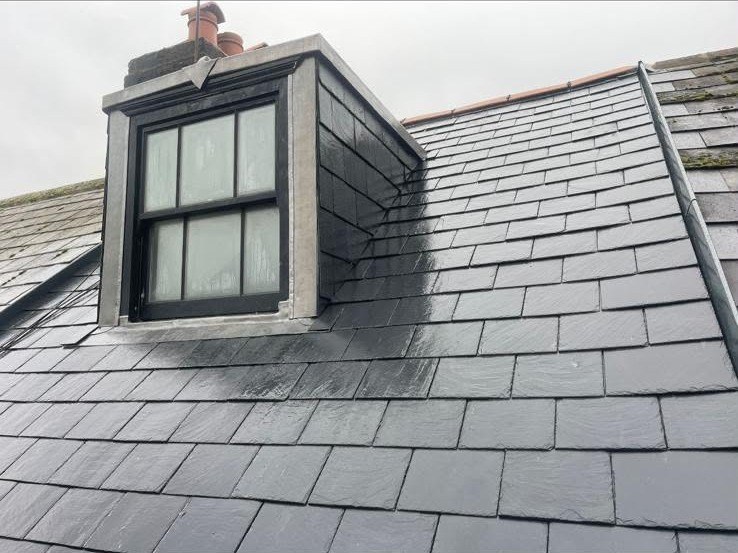
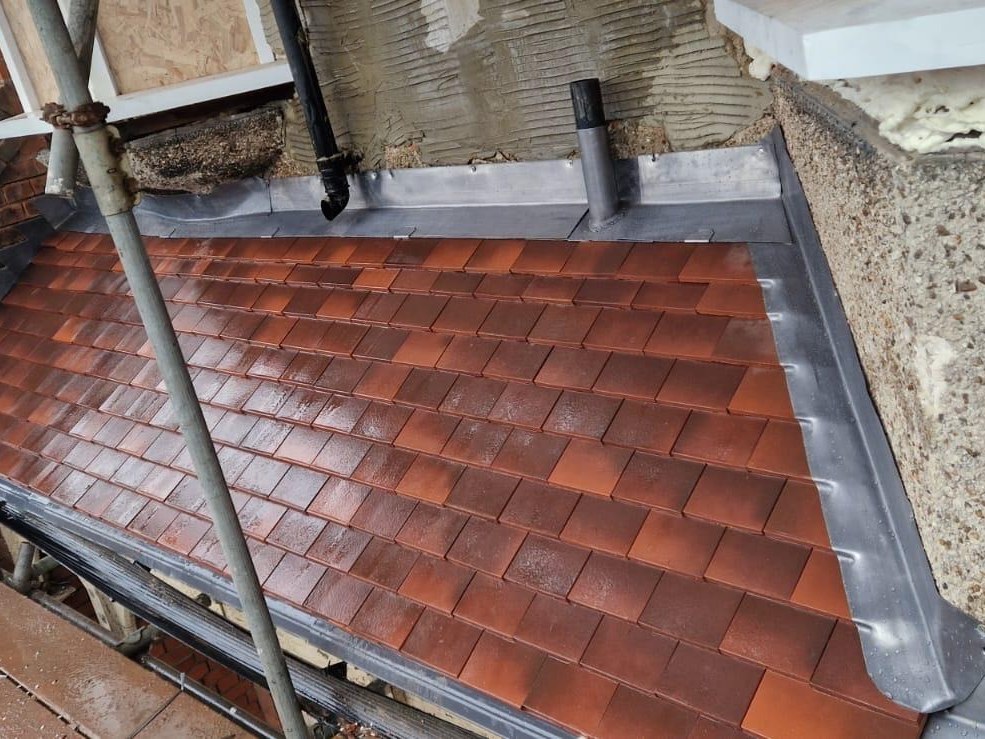
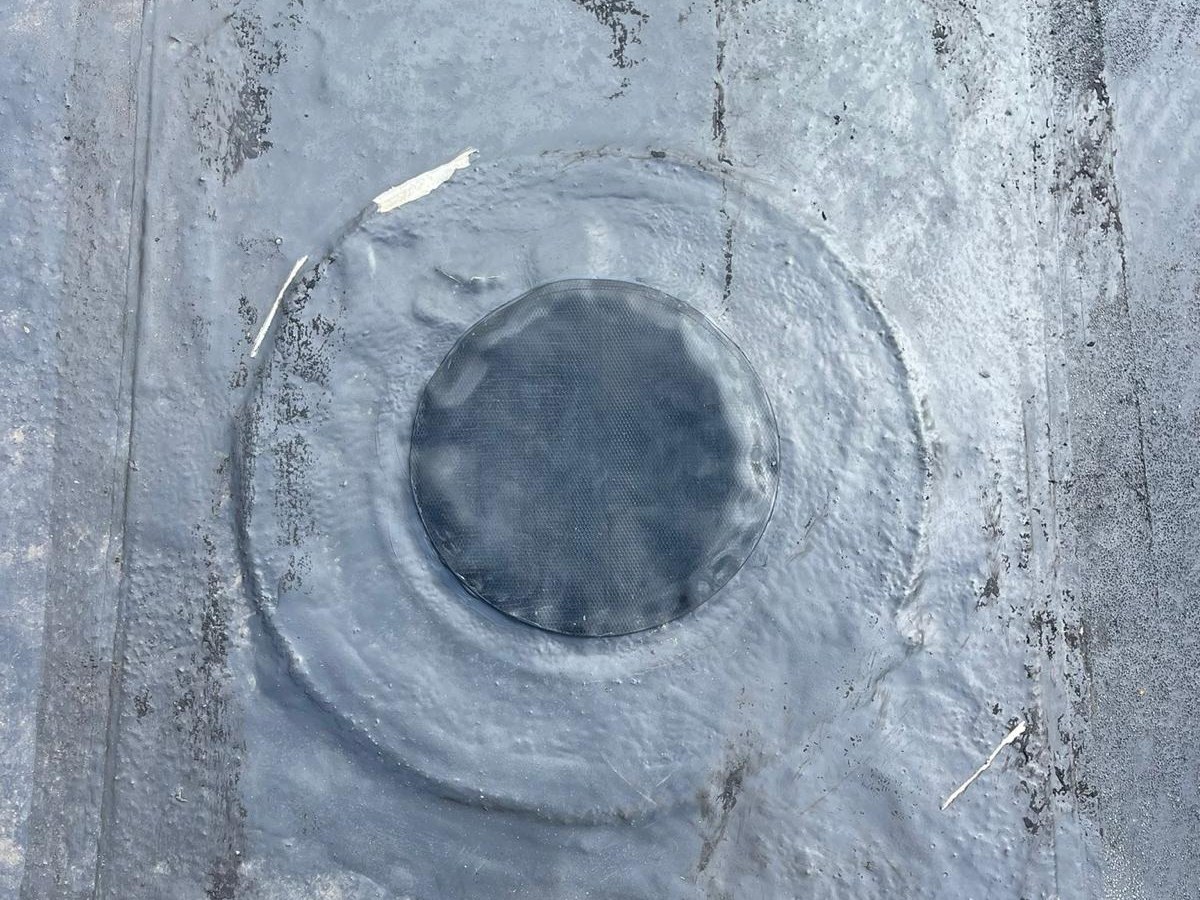
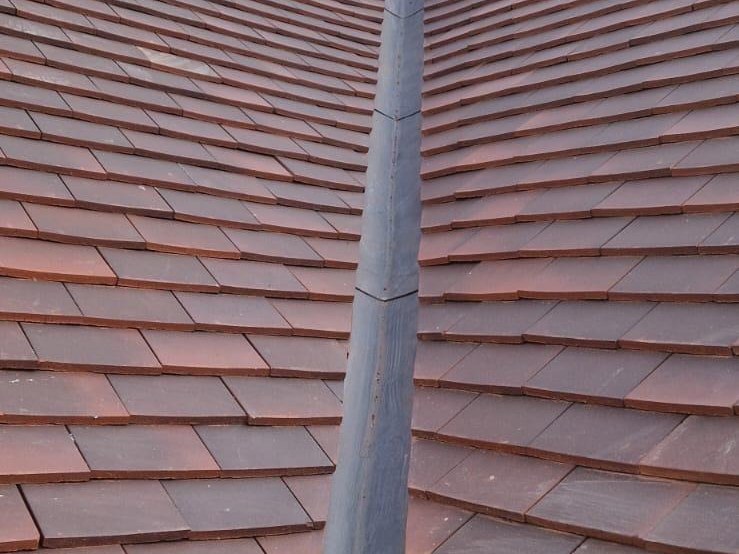
Overview
A roof slope sheds water on its own. Everywhere the slope stops — a chimney, a wall, a valley, a parapet, a dormer cheek, a bay top — something has to carry the water back onto the covering, and that something is almost always lead. Get it right and it outlives the tiles. Get it wrong and the roof leaks regardless of how good the covering above it is.
We carry out valley linings, chimney front aprons, stepped and cover flashings, back gutters, parapet and box gutter linings, dormer and bay roofs, soakers, hips and abutment details. Where geometry demands a joint that cannot be lapped, we weld it rather than sealing it — lead welding produces a joint of the same material and the same lifespan, whereas mastic produces a repair with a two-winter shelf life.
This is not a subcontracted extra for us. Our roofers dress lead every week, which is exactly why the flashings on our new roofs and our repairs are formed properly rather than bodged to save an hour.
Anyone with a persistent leak at a chimney or abutment, owners of period and bay-fronted properties, homeowners re-roofing who want the details done properly, and commercial owners with parapet and box gutter runs.
When a stack leaks in driving rain, when mastic repairs keep failing, when lead is split, ripped, fatigued or was cut too short by a previous contractor, and whenever a covering is replaced above it.
Lead moves with temperature. Sheet sizes, joint spacing, clip fixings and code thickness all exist to accommodate that movement. Ignore them and the lead splits along the fold, usually within two or three years.
Correct code lead, properly dressed to profile, chased and pointed into masonry where required, welded where lapping is not possible, and photographed so you can see the detail that is now hidden.
What Goes Wrong
Lead failures leak inward and downward into the structure, often for years, before anything reaches a ceiling. It is the most common cause of the leaks that nobody has been able to find.
A failed apron or back gutter soaks masonry rather than dripping into the loft. The first symptom is often salt staining or damp plaster in a bedroom, diagnosed as rising damp and treated as such — expensively and pointlessly.
Water tracking behind a short or split flashing runs onto rafter ends and wall plates, the parts of a roof that are hardest and most expensive to replace.
Mastic over failed lead buys a season. Three of those cost more than the flashing done properly once, and they leave a mess that has to be cleaned off before proper work can start.
Oversized sheets and missing expansion joints crack along the fold line. The lead looks intact from the ground and is open along its entire length.
How It Works
We inspect the detail itself and the area around it — pointing, flaunching, brickwork, the covering that discharges onto it — and check the loft for where the water is actually arriving.
You are shown why the lead has failed: split from movement, cut short, laid to the wrong falls, wrong code for the sheet size, or simply worn out after decades of service.
The scope names the detail, the lead code and the method — dressed, welded, chased and pointed — and is priced in writing before any work starts.
Lead is cut and dressed to profile on site, laps and expansion joints set out to suit the run, welded where geometry requires it, fixed with clips and chased into the masonry with fresh pointing.
The finished detail is checked, water-tested where sensible, photographed for your records, and covered by the guarantee applicable to the work carried out.
What You Get
Correctly specified and dressed lead is one of the longest-lived materials on any building — decades of service with no maintenance.
Most 'unfindable' leaks are lead details. Replacing the detail properly ends the cycle of annual patch-ups.
Where a lap will not work, a welded joint is the same material with the same lifespan, rather than a consumable that fails on a schedule.
Sheet sizes, joints and clips set out so the lead can expand and contract without tearing itself along a fold.
Because our own crew does the lead, the details on a new roof are formed to the same standard as the covering rather than rushed at the end.
£1,000,000 public liability cover and a team trained on our own sites — no subcontracted detail work with nobody to call in three years.
In Detail
Leadwork is a set of specific details, each with its own rules about size, fall, fixing and overlap.
A stack needs four things working together: a front apron, stepped side flashings with soakers where the covering requires them, a back gutter behind the stack, and sound pointing and flaunching above. Failure in any one of them produces the same symptom, which is why partial repairs so often disappoint.
Back gutters are the most commonly botched element on Morden and south London stacks: too shallow, too short, or formed from a single piece that has since split. Done properly, with the correct upstand and lap onto the covering, they are the difference between a dry chimney breast and a decade of damp.
A lead valley carries the combined discharge of two slopes. It needs adequate width, correct lap lengths at joints, support underneath, and tiles or slates cut cleanly to a consistent line rather than bedded in mortar to hide a rough cut.
Where a valley has failed, we look at whether debris damming, an undersized lining or thermal splitting caused it, because relining without fixing the cause simply resets the clock.
Where a roof meets a wall, cover flashings are chased into a raked joint, wedged and pointed, with the correct overlap onto the covering below. Bedding onto the face of the brickwork is quick and fails quickly.
Parapet and box gutter linings are longer runs and therefore the most movement-sensitive lead on a building. Correct bay lengths, drips and expansion joints are what stop them cracking, along with outlets that are properly formed rather than cut through.
Bay and porch tops are small flat or low-pitch lead roofs in their own right, common on Victorian and Edwardian streets across south London and Surrey. They need falls, drips, welted edges and clipped free edges to survive wind.
Dormer cheeks and tops combine several details in a small area, which is where oversized single sheets and missing joints most often cause splitting.
Lead is specified by code — thickness — and the correct code depends on the detail, the sheet size and the exposure. Using a lighter code to save cost is a false economy: thinner lead fatigues faster and tears at fixings.
Lead welding fuses two pieces using lead itself as the filler, producing a joint with the same properties as the sheet. It is used where geometry makes a simple lap impossible — complex corners, outlets, awkward junctions — and it is a genuine skill rather than a soldering exercise.
Domestic leadwork is detail work: chimneys, valleys, bays and dormers on occupied houses, often on period properties where appearance matters as much as performance.
Commercial leadwork is more often long parapet and box gutter runs where movement, outlet capacity and access planning dominate. Both are covered from our Morden base across London, Surrey and the South East.
Where We Work
Questions
If your question is not here, call 07808 839833 and speak to a roofer rather than a call centre.
It depends on the detail, its size, the lead code required and the access needed — a chimney apron and a parapet gutter lining are very different jobs. The survey is free for existing homeowners and the work is priced in writing before it starts.
Correctly specified and dressed lead is one of the longest-lived roofing materials there is, routinely giving decades of service. Most failures we replace are the result of wrong sizing, missing expansion joints or thin code rather than age.
Usually because only one of the four chimney details was addressed, or because mastic was used over failed lead. A stack needs apron, side flashings, back gutter and pointing all working together.
We will not sell you a sealant repair as a solution. Sealant has a short life and leaves a mess that has to be removed before the detail can be done properly, so it usually adds cost rather than saving it.
Most domestic lead details are a day or two depending on access and scaffolding. Longer parapet and box gutter runs take proportionally longer, and you get a timeframe with the written quote.
Yes. Period bays, dormers, parapets and valleys across south London and Surrey are a regular part of our work, and traditional detailing is what lead is designed for.
Yes. Flashings, valleys and abutment details are part of the installation scope and are covered by the 25-year pitched roof guarantee.
Yes. Where a joint cannot be lapped, we weld it using lead as the filler, producing a joint with the same lifespan as the sheet.
Yes. We hold £1,000,000 public liability cover and details are provided with every quote.
Yes — Greater London, Surrey, Kent, West and East Sussex, Hampshire, Reading and the Isle of Wight.
Free Estimate
Free survey for homeowners, a written price naming the detail and the lead code, and hand-dressed work from roofers who do lead every week.